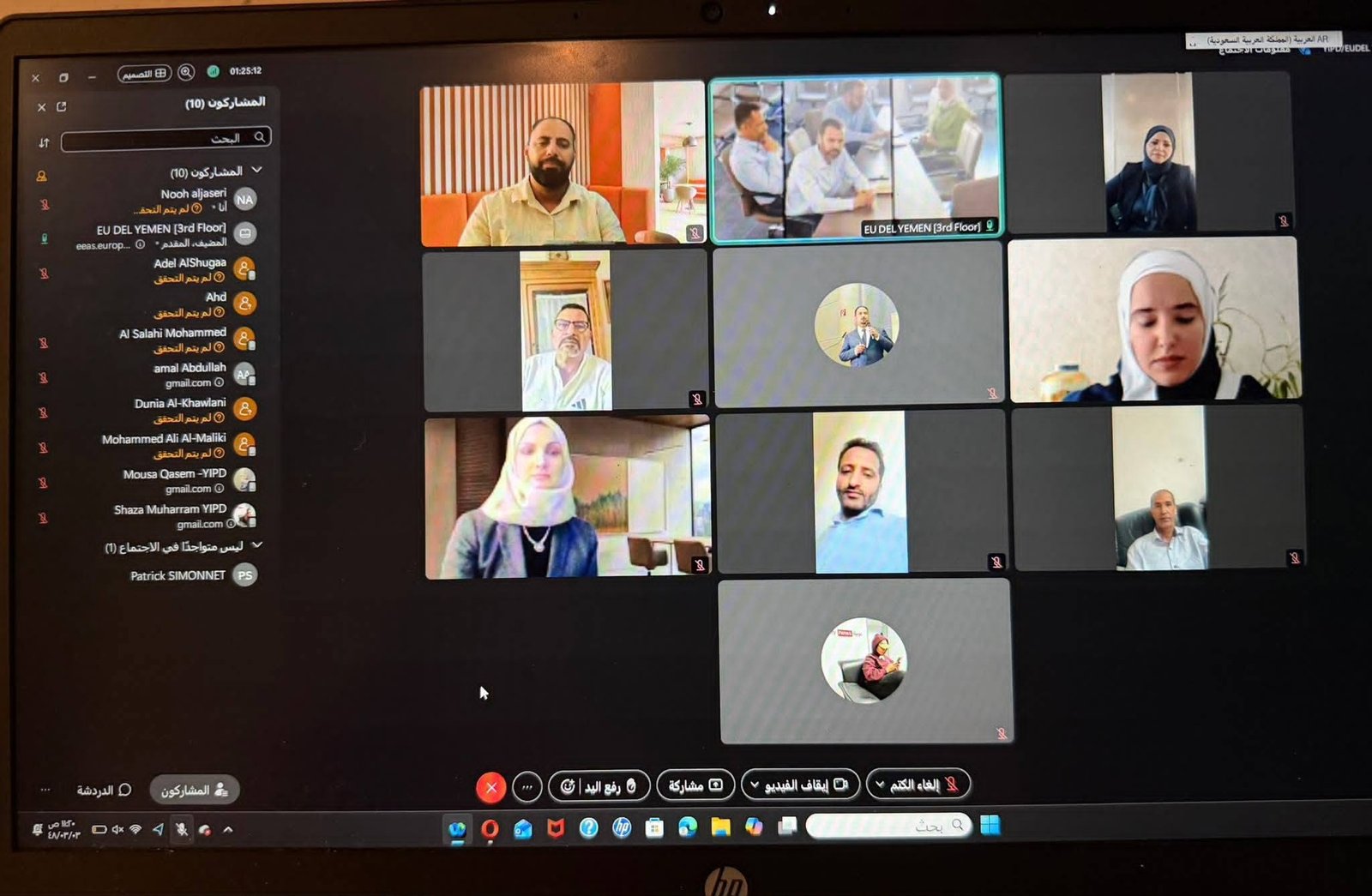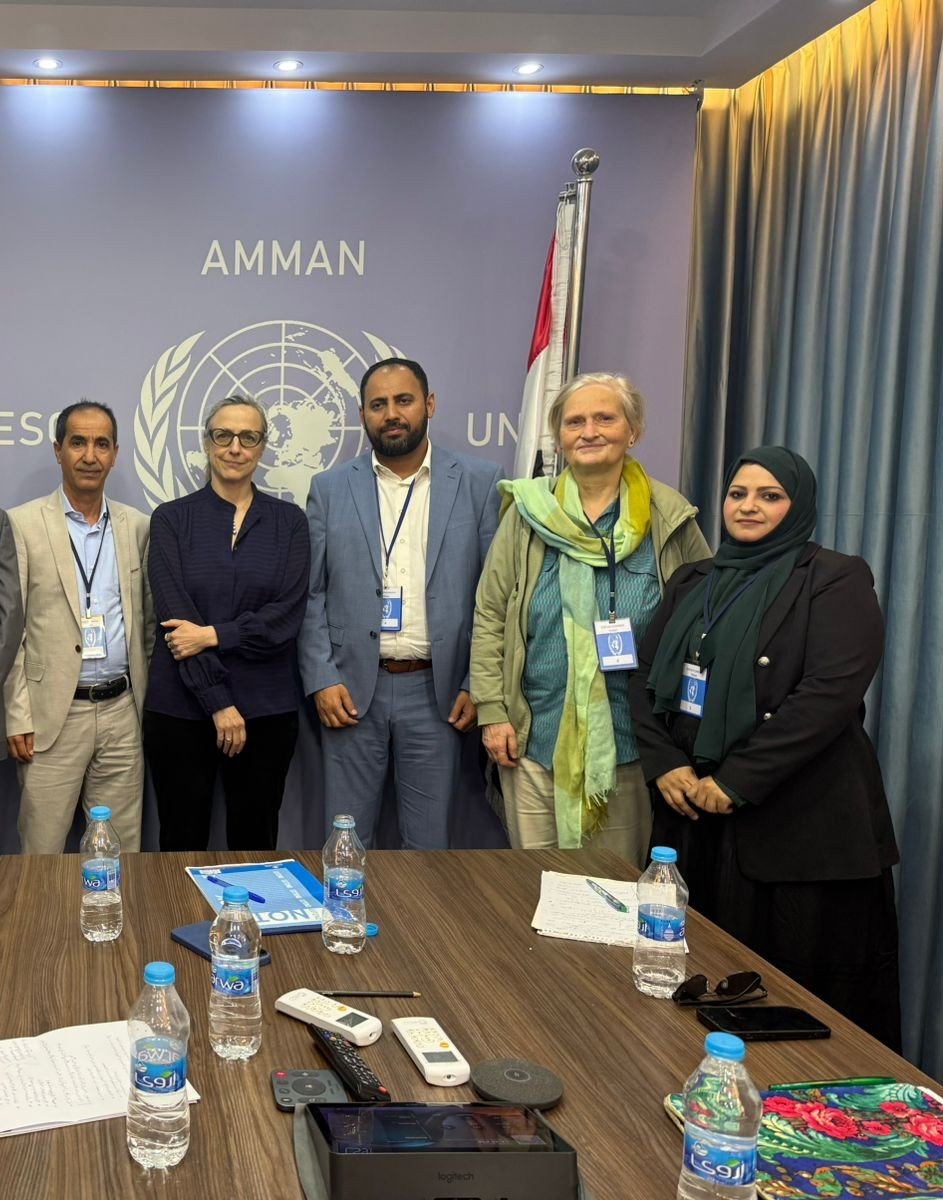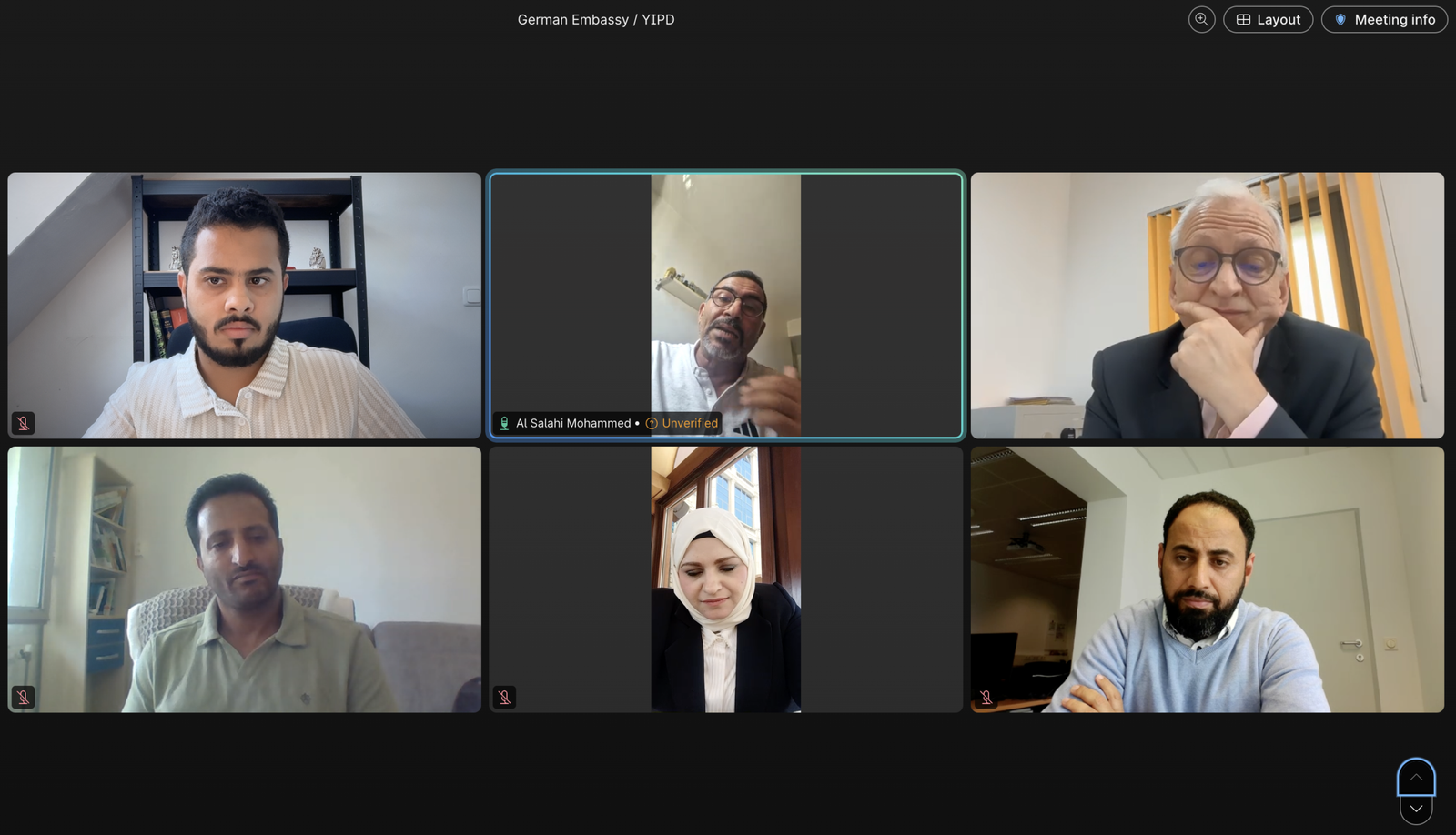
The Yemeni Initiative for Peace and Development held talks on Sunday with Germany’s Ambassador to Yemen, Thomas Schneider, on strengthening intra-Yemeni dialogue and the role of civil society in advancing peace, reconciliation and confidence-building amid the country’s evolving political, security and humanitarian challenges.
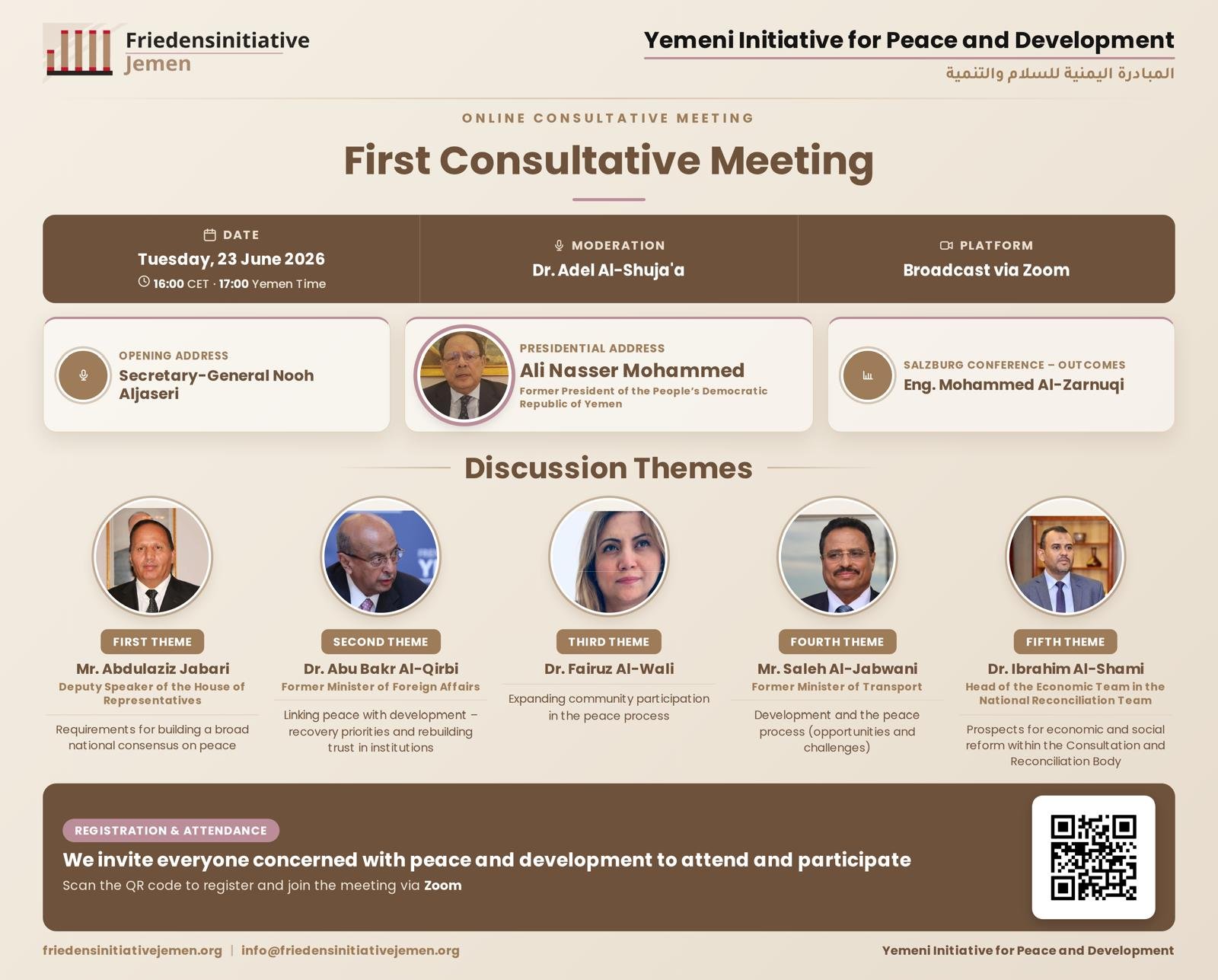
During the virtual consultation, the Initiative’s Secretary-General, Nooh Al-Jaseri, outlined its mission and key areas of work. He highlighted the outcomes of the Salzburg International Conference for Peace and Development in Yemen, as well as the National Charter, the proposed National Centre for Reconciliation and Confidence-Building, and the Initiative’s efforts to promote dialogue among Yemenis.
Ahed Al-Tamimi, Head of the Research and Policy Studies Department, presented the Initiative’s vision for the peace process. She stressed the importance of ensuring Yemeni ownership of peace efforts, noting that the latest escalation had further narrowed the space for political dialogue. She called for practical steps to reduce tensions and create the conditions needed for a return to the political process.
Ambassador Schneider described dialogue among Yemenis as one of the most pressing challenges facing the country. He noted that meaningful intra-Yemeni engagement remains particularly difficult and emphasised the need for a strong civil society capable of putting forward credible ideas and practical alternatives.
He also highlighted the value of drawing on international experience and approaches that could help advance dialogue and peace, while underlining that any lasting solution must be rooted in Yemen’s own realities and distinct circumstances.
Amal Abdullah, Head of the Media and Communications Department, addressed the profound impact of years of war on Yemeni society, including the deterioration of education, declining tolerance of differing views, and the spread of hate speech, violence and discrimination.
She stressed the importance of engaging children, young people, universities and women in efforts to foster a culture of dialogue and peaceful coexistence. She also drew attention to the need to safeguard children’s access to essential vaccinations.
Mohammed Al-Maliki, Deputy Chair of the General Assembly, presented the Initiative’s vision for a National Centre for Reconciliation and Confidence-Building. He emphasised the need to broaden participation in the dialogue process to include tribal leaders, sheikhs, community figures, young people, women, academics and civil society organisations. Such an inclusive approach, he said, would help restore trust and ease political and social polarisation.
The discussion also covered the role of young people, coordination with the Office of the UN Special Envoy for Yemen, and the practical contribution civil society could make to protecting civilian infrastructure and vital economic facilities during periods of escalation.
As part of the exchange on international experience, Mohammed Al-Salahi, a member of the International Relations and Partnerships Department, asked what lessons Yemenis might draw from Germany’s experience in confronting the legacy of Nazism and fascism and building a state founded on equal citizenship. He made clear that the comparison was intended to identify relevant lessons, rather than equate the two historical experiences.
Ambassador Schneider underscored the value of learning from historical processes, including the Helsinki Process. At the same time, he reiterated that a Yemeni solution must reflect the country’s own context and that developing a shared Yemeni vision for the future of the state and society would be an essential foundation for lasting peace.
On German support for civil society, Schneider explained that assistance is more likely to be provided for clearly defined projects with specific objectives and measurable outcomes.
At the close of the meeting, the ambassador commended the Initiative’s work and the commitment of its members to playing an active role in Yemen’s future.
The Yemeni Initiative for Peace and Development reaffirmed its commitment to expanding dialogue, advancing reconciliation and rebuilding trust, while turning calls for peace into practical and achievable courses of action.
Yemeni Initiative for Peace and Development
From intra-Yemeni dialogue to peacebuilding and reconciliation.